
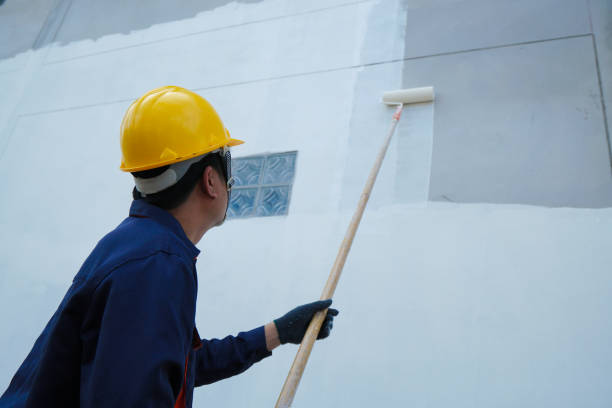

I remember standing outside my cousin’s place last summer, staring at his house like it personally offended me. The color had faded into this weird chalky beige, kind of like old cereal left open too long. He kept saying, “It’s fine, it still works.” Works for what exactly? Blending into the sidewalk? That’s when it clicked for me that exterior paint isn’t about being fancy, it’s more like armor. And yeah, I learned this the hard way after watching his DIY job peel off in less than a year.
People online joke about “just throwing a coat on it,” but the outside of a house deals with heat, rain, wind, pollution, and whatever birds are doing up there. It’s not the same as painting a bedroom wall while listening to a podcast. That’s why a lot of homeowners eventually stop playing around and look for real help, like actual professional exterior painters who know what they’re doing beyond watching a five-minute YouTube tutorial.
Weather doesn’t care about your weekend plans
This part surprised me when I first started reading about it. Exterior paint failure is mostly about timing, not color choice. Paint needs a certain temperature range to cure properly. Too hot and it dries too fast, too cold and it never bonds right. I saw someone on Reddit complain that their paint cracked in three months, and buried in the comments was someone asking, “Did you paint in August?” Turns out that was the issue.
Humidity messes things up too. Moisture gets trapped under the paint, and later it bubbles like a bad sunburn. There’s a lesser-known stat floating around contractor forums that nearly half of exterior paint issues come from poor surface prep and bad weather timing, not cheap paint. That blew my mind a bit. People always blame the paint brand first.
That’s where experience actually matters. Someone who paints houses for a living doesn’t just show up and start rolling. They wait. They test. They poke the siding like it’s a science experiment. It sounds dramatic, but it saves money long term.
Prep work is the boring part everyone skips
No one likes prep. Even pros complain about it on Instagram stories, joking about scraping paint for eight hours straight. But prep is everything. Scraping, sanding, power washing, sealing cracks, checking for rot. Miss one step and the final result looks okay for a few months, then starts falling apart like cheap sneakers.
I once helped a friend paint his garage. We skipped sanding because “it looked fine.” Big mistake. Six months later the paint was flaking off in strips, like peeling stickers. He ended up paying twice, once for supplies and once for someone else to redo it.
This is why hiring professional exterior painters isn’t just about saving time, it’s about not wasting effort. They notice stuff most homeowners don’t. Hairline cracks. Soft wood spots. Old layers of incompatible paint that need special primers. It’s boring, yeah, but boring is what keeps a house looking decent for ten years instead of two.
Color choice is weirdly emotional
People pretend choosing an exterior color is logical. It’s not. It’s emotional and slightly stressful. I’ve seen couples argue over shades of gray like it’s a life decision. Online, there’s a whole side of TikTok roasting homeowners for picking “millennial gray” or “sad beige mom” colors for their houses.
Here’s a fun niche fact I picked up: lighter colors can actually reduce surface temperature by several degrees compared to darker ones. That means less expansion and contraction over time. It’s small, but over years it adds up. Still, most people pick colors based on vibes and neighborhood pressure. No one wants to be “that house” on the block.
Painters who’ve been around awhile usually give honest opinions. Not the sugarcoated kind. They’ll say stuff like, “This will look good now, but you’ll hate it in two years.” That kind of feedback is underrated. Friends won’t say it. Contractors will, especially if they’ve seen trends come and go.
It’s not just about looks, it’s protection
This part gets overlooked a lot. Exterior paint is basically a moisture barrier. Once it fails, water gets in, and water is sneaky. It causes wood rot, mold, even structural damage if ignored long enough. I read a post on a home improvement forum where someone delayed repainting for “just one more year” and ended up replacing entire sections of siding. That one year cost them thousands.
Paint also protects against UV damage. Sunlight breaks down materials over time. Good paint slows that process. It’s kind of like sunscreen for your house, except your house can’t remind you to reapply.
Why DIY sounds cheaper but usually isn’t
I get the appeal of DIY. I really do. It feels productive and you get to say “I did this.” But exterior painting is one of those projects where the hidden costs pile up fast. Ladders, safety gear, sprayers, brushes that don’t suck, drop cloths, and then your time. Lots of time.
Then there’s risk. Falling off a ladder isn’t a small oops. Even professionals take safety seriously because they’ve seen what happens when people don’t. I know someone who messed up their shoulder trying to reach a tricky corner. Painting stopped, medical bills started.
By the time many homeowners quit halfway, they’ve already spent close to what they would’ve paid someone else, minus the stress. That’s when calling in pros feels less like giving up and more like being realistic.
The quiet confidence of someone who’s done it a hundred times
There’s something calming about watching someone who knows their craft. Smooth movements, no rushing, no panic when something goes wrong. They’ve seen worse. They fix it and move on.
I chatted with a painter once who said the biggest difference between amateurs and experienced painters is knowing what not to do. Like when to stop for the day. Or when a surface just isn’t ready, no matter how much the homeowner wants it done by Friday.
That kind of judgment doesn’t come from manuals. It comes from mistakes. Lots of them. Which is kind of comforting, honestly.
Social media makes it look easier than it is
Instagram and YouTube have made painting look almost therapeutic. Smooth rolls, perfect edges, satisfying before-and-afters. What you don’t see is the cleanup, the re-dos, the weather delays. Or the fact that many of those videos are shot by people who’ve done this forever.
There’s a bit of backlash online now, people posting their DIY fails as warnings. Peeling paint, uneven finishes, colors that look nothing like the sample. It’s funny until it’s your house.
At the end of the day it’s about peace of mind
A freshly painted exterior does something weirdly emotional. It makes a house feel cared for. Solid. Like it’s ready to handle whatever weather throws at it. You stop noticing the flaws because there aren’t many left.
I’m not saying everyone must hire professionals every time. Some people genuinely enjoy the process and do a solid job. But for most homeowners, especially those who value their weekends and sanity, trusting experienced hands just makes sense.