

Overview
For ages, Rudraksha has been revered as a sign of inner serenity, healing, and spiritual strength. Due of its increasing popularity, a lot of individuals want to be sure the Rudraksha they are purchasing is genuine. Since imitations abound on the market, it is crucial to understand how to recognize authentic Rudraksha. You can tell the difference between a real and imitation Rudraksha by closely examining physical characteristics.
Examine the Mukhis (Faces) in Nature
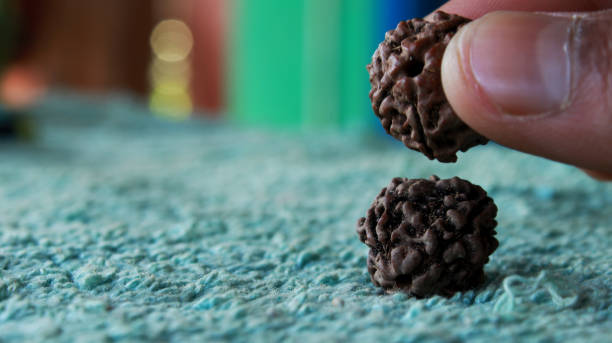
Rudraksha’s mukhi—natural vertical lines that run from top to bottom—are its most distinctive characteristic. There are a certain amount of these naturally occurring lines in each Rudraksha. Pay great attention to these lines while determining how to identify original Rudraksha. They should have no false cutting or connecting marks and be deep, transparent, and continuous.
Examine the Texture and Shape
Unlike a glass bead, a genuine Rudraksha is never precisely spherical or polished. It often has a rough surface and an irregular texture by nature. Its natural shapes, ridges, and projections give it a distinctive look. A bead may be fake if it appears too glossy or smooth. Finding the real Rudraksha requires paying attention to these minor nuances.
Check the Weight and Color
The natural earthy or brownish hue of original Rudraksha beads is typical. They feel substantial to the touch yet are lightweight. Despite having a similar appearance, fake ones made of plastic, wood, or molded seeds can feel heavier or unnaturally light. You can determine the genuineness of the bead by gently touching and stroking it.
Check for Structure and Holes
There is a naturally occurring hole in the middle of every authentic Rudraksha that extends from top to bottom. This hole is spontaneously produced rather than drilled. It could not be genuine if you notice indications of artificial drilling. Additionally, the interior of a genuine Rudraksha will have the same number of divisions as the mukhi as the exterior.
Verify Authenticity with a Water Test
The water test is among the most straightforward exams you may do. A glass of pure water should be filled with the Rudraksha. Because of its inherent density, a real bead often sinks, although many imitations float. This test should be used in conjunction with other physical feature checks, though, as it is insufficient on its own.
Steer clear of common artificial signs.
A lot of imitation Rudraksha beads are created by chemically shaping seeds or carving lines into them. A duplicate bead is evident if the lines appear shallow, crooked, or unnaturally carved. Likewise, it should arouse suspicion if the bead appears painted or excessively polished.
In conclusion
Being able to recognize an authentic Rudraksha by looking at its physical characteristics lets you connect with its genuine spiritual energy and avoid purchasing knockoffs. You may be confident that the Rudraksha you select is genuine by closely analyzing the mukhis, texture, natural hole, and other indicators. In addition to its historical significance, a real bead has inherent advantages for spiritual development, healing, and meditation.