
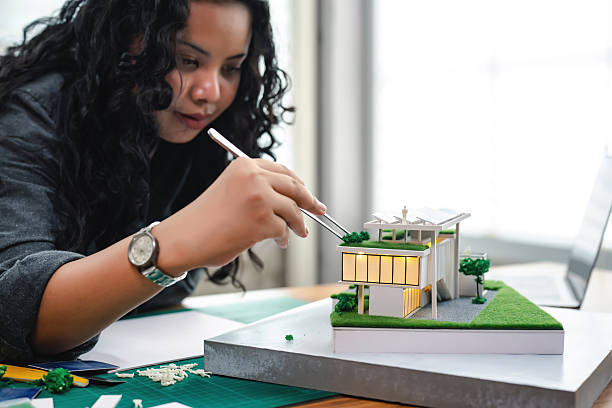

More Functional Than Most People Realize
Walk into most real estate sales offices and the model usually sits in a fairly central spot — not tucked in a corner as decoration, but positioned exactly where sales conversations naturally happen. That placement isn’t accidental. A real estate scale model does genuine functional work in that room, helping buyers understand the layout, orientation, and surroundings of a development far faster than flipping through a brochure or scrolling a tablet ever manages to.
Buyers making a major purchase decision want to understand things that are surprisingly hard to convey through photos or renderings alone — which units get morning sun, how close the nearest road actually is, what the view looks like from a specific floor, or how the clubhouse relates to the residential towers. A well-built model answers most of these questions at a glance, in a way that builds genuine confidence rather than requiring the buyer to take a sales rep’s word for it.
Design Decisions That Affect How Well It Sells
Not every model achieves this equally well, and small design decisions make a real difference in how effectively it supports the sales process. Clear labeling of unit types, phase boundaries, and amenity locations helps a buyer navigate the model independently rather than depending entirely on a sales rep to narrate every feature. A model that only makes sense with constant explanation isn’t doing its job as well as it should.
Color coding by unit type, tower, or construction phase is a simple addition that speeds up understanding significantly, especially for larger developments with multiple buildings or phased releases. A buyer glancing at a color-coded model can quickly locate the specific building or phase they’re interested in, rather than searching the whole layout each time a question comes up.
Lighting, again, plays a real role here — subtle interior lighting in a few representative units, along with illuminated walkways and common areas, helps a model stand out and hold attention in a sales office environment that’s often competing with several other visual displays, brochures, and screens for the buyer’s focus.
Scaling the Model to the Project’s Complexity
Large townships often benefit from a tiered approach — an overview model showing the entire development at a smaller scale, paired with a more detailed model of the specific phase currently being sold at a larger scale. This lets buyers understand both the bigger picture and the specific details relevant to their purchase decision without needing an impractically large single model to cover everything at once.
Smaller developments, by contrast, can usually be represented effectively in a single model at a reasonably large scale, giving buyers the fine detail — balcony layouts, facade materials, landscaping — that matters most when there isn’t a broader master plan context to also communicate.
Getting the Investment Right
Given how central this model becomes to the sales process, it’s worth treating the commissioning decision with real care rather than as an afterthought once marketing materials and brochures are already finalized. A real estate scale model built with genuine understanding of how buyers will actually use it — not just how it will photograph for a press release — tends to earn back its cost many times over across the life of a sales campaign.
Developers who invest properly in this piece, working with a studio that understands both the craft and the sales psychology behind it, typically find their sales teams reference the model constantly, in nearly every serious buyer conversation, whether or not anyone in the room consciously notices how much of the pitch runs through it.
Why This Small Detail Deserves a Bigger Budget Conversation
Marketing budgets for large developments often get allocated heavily toward digital advertising and brochure design, with the sales office model receiving comparatively little consideration until fairly late in the process. Given how consistently this piece gets referenced in actual buyer conversations, it’s worth revisiting that allocation earlier in the planning stage.
A well-considered real estate scale model, planned alongside the rest of the marketing strategy rather than bolted on afterward, tends to deliver a return on investment that’s easy to underestimate until you’ve watched a sales team lean on it, conversation after conversation, throughout an entire campaign.
Refreshing the Model as a Project Matures
Sales campaigns for large developments often run for years, and a model that looked current at launch can start to feel dated or inaccurate as phases sell out, designs get refined, or amenities change. Periodically refreshing the model — updating sold-unit indicators, correcting details that have shifted, or expanding it as new phases launch — keeps it functioning as an accurate, trustworthy sales tool rather than a stale display piece.
Building a maintenance relationship with the original studio makes these updates considerably easier and more consistent than starting fresh with a new vendor each time, since they already understand the model’s construction and can make targeted adjustments without needing to reverse-engineer someone else’s earlier work.
Small Details That Build Buyer Trust
Beyond the major layout and lighting decisions already discussed, small finishing touches genuinely matter for buyer trust — accurate signage matching the actual project branding, correctly represented landscaping that matches the real planting scheme rather than generic greenery, and a base that looks clean and well maintained rather than dusty or worn from months of display.
These details are easy to overlook when focused on bigger-picture decisions, but buyers who’ve toured multiple developments do notice when a sales office model feels cared for versus one that’s clearly been neglected, and that impression quietly reflects on how they perceive the development itself.
Consistency Across Multiple Sales Locations
For developers with multiple sales offices representing the same project across different cities, consistency between models becomes its own consideration. Buyers comparing notes between locations, or a company representative visiting different offices, should see the same accurate representation of the development regardless of which physical location they happen to visit.
Working with a single studio capable of producing multiple consistent units, rather than commissioning separate models from different vendors for each location, tends to be the more reliable way to maintain that consistency across an entire sales network.