
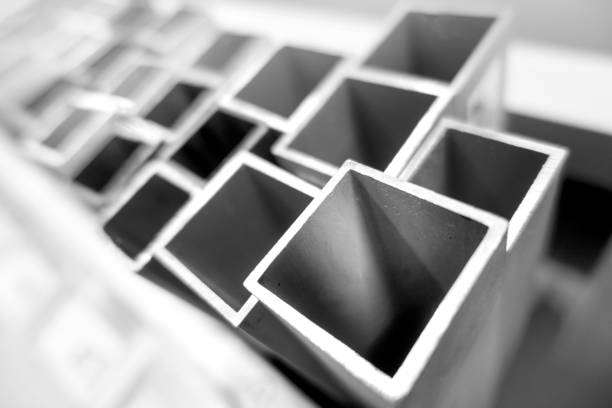

Across manufacturing floors, automation cells, machine enclosures, and custom workstations, one material repeatedly appears in modern engineering designs. Aluminum framing combines strength, flexibility, precision, and efficiency in ways that support both simple assemblies and highly complex industrial systems. That combination explains why engineers continue to select aluminum framing material for projects where performance, adaptability, and long-term value matter.
Exceptional Strength-to-Weight Ratio for Structural Integrity
Unlike many traditional construction materials, aluminum delivers impressive structural performance without excessive weight. Engineers frequently choose systems such as MiniTec Aluminum Framing because the material supports substantial loads while remaining easy to transport, position, and install. Reduced weight often simplifies handling requirements and lowers demands on supporting structures.
Beyond installation advantages, lighter framing helps improve equipment mobility and system adaptability. Large machine guards, automation platforms, and custom assemblies can maintain rigidity without introducing unnecessary mass that complicates future modifications or relocation efforts.
Natural Corrosion Resistance Without Additional Coatings
Exposure to moisture, humidity, and varying industrial conditions creates challenges for many structural materials. Aluminum naturally develops a protective oxide layer that helps resist corrosion without requiring extensive coatings or treatments to remain functional.
Consequently, aluminum framing material performs well in manufacturing facilities, laboratories, warehouses, and processing environments where long-term durability is important. Engineers often appreciate that corrosion resistance remains built into the material itself rather than depending entirely on external protective finishes.
Rapid Assembly and Reconfigurability via Modular T-Slots
Project timelines often influence material selection decisions. Modular systems built around extruded aluminum T slot profiles allow components to connect quickly using standardized fastening methods that eliminate much of the fabrication complexity associated with welded structures.
Additionally, future modifications become far easier to accomplish. A T slot aluminum extrusion system can be expanded, adjusted, or reconfigured without cutting apart existing assemblies, making it particularly attractive for facilities that continuously refine production layouts and equipment arrangements.
High Dimensional Accuracy and Tight Engineering Tolerances
Precision matters whenever machinery, automation equipment, sensors, or production systems depend on accurate positioning. Extrusion manufacturing processes produce consistent profiles that help engineers maintain tight dimensional requirements throughout a project.
Meanwhile, predictable tolerances simplify design work and assembly planning. Many engineering teams rely on MiniTec extruded aluminum framing because accurate profile geometry helps ensure reliable alignment across complex systems where even small deviations may affect overall performance.
Long-Term Cost Efficiency with Zero Ongoing Maintenance
Initial material costs represent only part of the overall investment equation. Maintenance requirements, repair expenses, downtime risks, and replacement cycles all contribute to long-term ownership costs that engineers evaluate carefully. Rather than requiring ongoing surface treatments or extensive upkeep, aluminum structures typically maintain their appearance and functionality with minimal intervention. That durability often allows organizations to realize meaningful savings throughout the lifespan of an installation.
Excellent Thermal and Electrical Conductivity Properties
Many industrial applications benefit from aluminum’s conductive characteristics. Thermal conductivity helps dissipate heat efficiently in certain equipment designs, while electrical conductivity supports grounding and other specialized engineering requirements.
Accordingly, engineers frequently incorporate T slot extrusion systems into applications involving electronics, automation equipment, and manufacturing processes where thermal management contributes to operational stability. These material properties provide additional versatility beyond structural performance alone.
Sustainable Life Cycle and Complete Material Recyclability
Environmental considerations increasingly influence engineering decisions across many industries. Aluminum stands out because it can be recycled repeatedly without significantly degrading its material characteristics, making it a practical option for organizations focused on sustainability goals.
Furthermore, recycling aluminum typically requires far less energy than producing new material from raw resources. Engineers evaluating life-cycle impacts often view recyclable framing systems as an effective way to support both operational and environmental objectives simultaneously.
Clean, Professional Aesthetic for Modern Industrial Environments
Appearance may not drive every engineering decision, but it often contributes to workplace organization, customer impressions, and equipment presentation. Clean profile lines and consistent finishes create a professional look that complements modern manufacturing and automation environments.
Finally, visual appeal combines naturally with functionality in modular framing systems. Whether building machine guards, workstations, enclosures, conveyors, or custom structures using an aluminum framing kit, organizations often appreciate how these systems deliver both technical performance and polished presentation. Minitec Solutions helps engineers, manufacturers, and system designers develop adaptable framing solutions using advanced aluminum technologies that support efficient assembly, long-term reliability, and future-ready industrial applications.